A machine will not stay running.
Inspect the fuel path, replace a damaged line or filter, and check the primer before the crew sends the machine to the shop.
Core researchField repair, made practical
FieldMend is a compact field repair kit being designed for crews who cannot afford for a small equipment failure to become a lost afternoon.
A universal core for fuel-system basics, starter-rope repairs, spark checks, and small replacement hardware.
Currently in field research · Designed for landscaping and tree-care crews
The idea
Crews already carry tools. The gap is often the small replacement part, the right little consumable, or a clear way to decide whether a machine can get back to work on site.
FieldMend is being shaped around those moments: organized parts, practical tools, and a guide that helps a crew diagnose the simple stuff quickly.
Where it earns its space
These are the moments FieldMend is researching first: common enough to matter, simple enough to handle in the field, and expensive enough to ruin a day when the right part is missing.
Inspect the fuel path, replace a damaged line or filter, and check the primer before the crew sends the machine to the shop.
Core researchKeep starter rope and handles ready for the small repair that can put a blower, trimmer, or saw back in service.
Core researchUse a spark check, cleaning supplies, and common clips or fasteners to decide whether the fix belongs on site.
Under validationThe kit direction
FieldMend is being shaped around a universal core that a crew could buy without filling out a fitment questionnaire. Higher-variation parts can become add-on modules after the field evidence is strong enough.
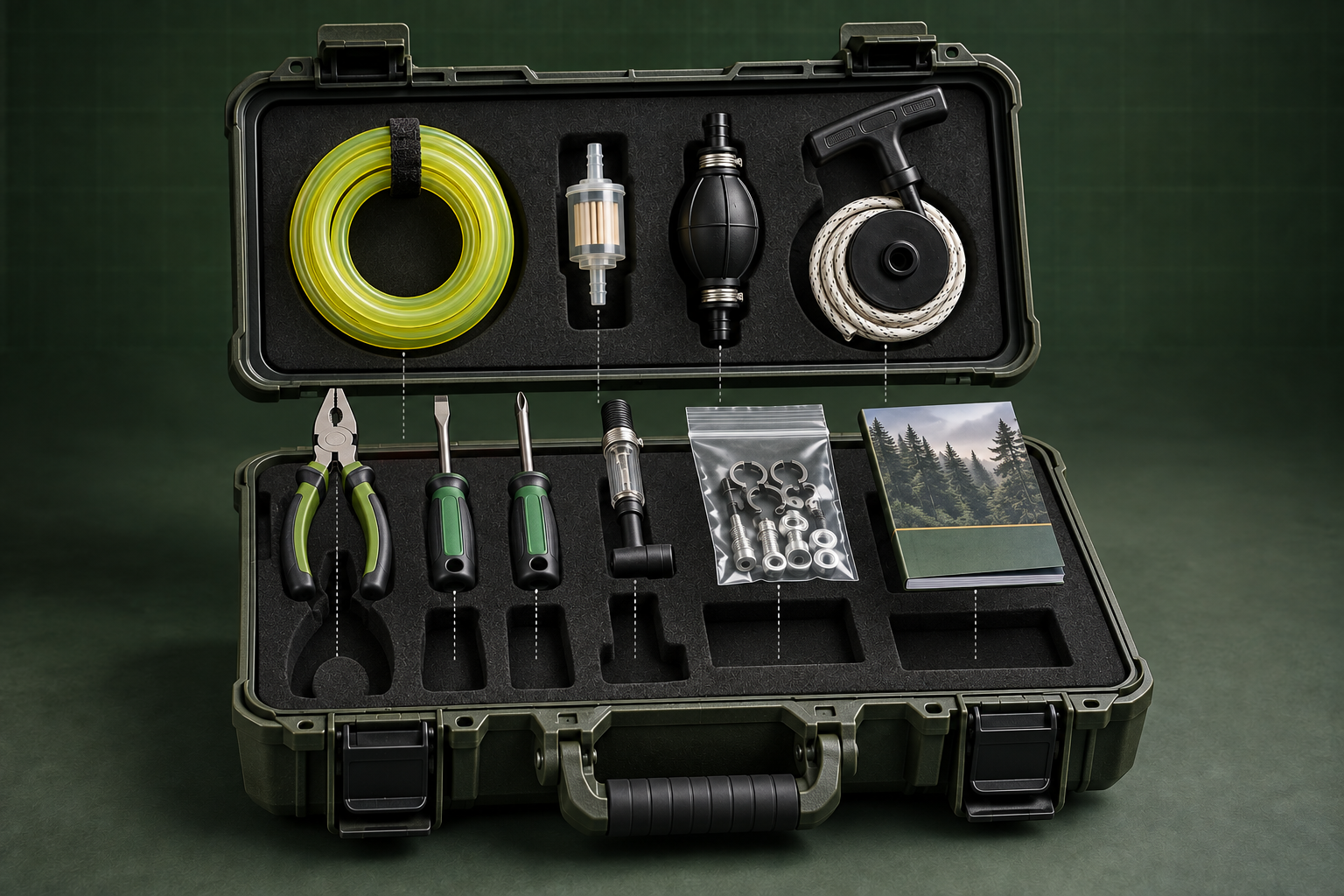
Fuel line, common filters, primer bulbs, starter rope, starter handles, and small replacement hardware.
Compact hand tools, spark-plug access, spark testing, cleaning supplies, and the basics a crew may not have in the truck.
Clear labels, visible quantities, foam-fit storage, and a refill path that makes missing pieces obvious.
Brand- or equipment-specific parts only after the universal core and the most common fitments are proven.
How it should work
Use the symptom and the guide to narrow down the simple checks first.
Grab a labeled, broadly useful replacement without searching through a loose tool bag.
Follow the short procedure, then test the machine before the crew moves on.
Clear stop points keep a quick field repair from turning into a bigger problem.
The product so far
Scroll through the current product direction. The exact fitment, sizes, and quantities will follow field interviews and supplier testing.
The case should make missing pieces obvious and keep the kit ready for the next truck, not become another loose tool bag.
Fuel-system basics, starter-rope repairs, spark checks, cleaning supplies, and small hardware form the universal core.
Bright labels make the parts visible at a glance. The high-variation items stay out of the core until there is enough evidence to stock them well.
A field guide should say what to check, what to replace, and when to stop and send the machine to the shop.
The final layout will leave room for refill packs and future add-on modules once field feedback shows what belongs there.
What we are testing
Fuel-system basics, starter-rope problems, spark checks, small hardware, and other repairs that can stop a route.
A universal core with labeled compartments, sensible quantities, and room for future equipment-specific add-ons.
Short, clear steps: what to check, what to replace, and when the right decision is to stop and call the shop.
Currently in field research
We are talking with landscaping and tree-care companies about what actually fails, what is already on the truck, and what would genuinely save time.
Email your field experienceQuestions we are answering
No. The first version is being designed around a broadly useful universal core. Equipment-specific parts can come later as clearly labeled add-ons.
No. It is for common, field-appropriate fixes and quick diagnosis. Engine internals, major ignition work, carburetor rebuilds, and unsafe repairs should still go to a shop.
Not yet. FieldMend is in research now so the parts, quantities, case, and price are based on real crew needs instead of guesses.
The first version is aimed at commercial landscaping and tree-care crews. A simpler homeowner version may come later.
For owners and crew leads
We are talking with landscaping and tree-care companies about what actually fails in the field, what is already on the truck, and what would genuinely save time.